
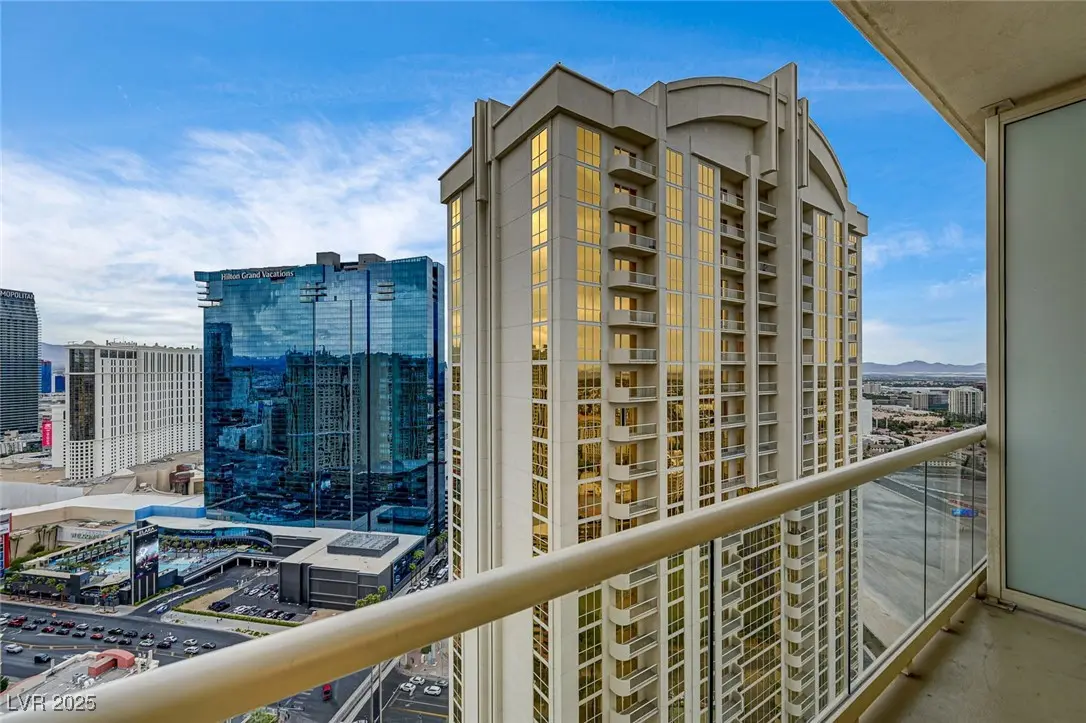
For years, investors in Las Vegas real estate treated condo‑hotels as entertainment plays. Pure condos appeared as appreciating assets. Investors viewed condo‑hotels as weekend trophies with nice cash flow. They rarely delivered strong yields once program splits, fees, and reserves reduced returns. Then the city changed the rules of engagement. Las Vegas didn't just add events. It stacked them. Formula 1 Grand Prix, the Super Bowl, Sphere residencies, global conferences, and high‑profile fight cards now overlap and repeat. The city's new rhythm has rewritten the return profile. The condo‑hotel math didn't change on paper. The demand curve did.
Event Are Creating a New Baseline for Returns
Old underwriting assumed event weeks were spikes, with fantastic average daily rate (ADR) followed by a return to baseline. But Las Vegas' mega‑events are now frequent and have global appeal. Instead of isolated spikes, we're witnessing plateaus. Multiple high‑ADR stretches each quarter that smooth volatility and elevate annualized returns. For condo‑hotel units tied to professional distribution such as brand.com engines, OTAs, and group blocks, the benefits are clear. You get higher occupancy, steadier cash flow, and shorter payback periods. A model once dismissed as "too operational" now merits serious underwriting.
Why Condo-Hotels Are Becoming Stronger Investments
Condo‑hotels used to lose the comparison for four reasons: split economics, program restrictions, wear‑and‑tear, and inconsistent marketing. Mega‑events are neutralizing these concerns.
-
Split Economics vs. Elevated ADR: Even a 50/50 split can outperform a self‑managed condo if ADR surges during multiple premium weeks.
-
Program Restrictions vs. Occupancy Insurance: Minimum‑night rules feel less limiting when your calendar is pre‑sold by global events you couldn't fill independently.
-
Wear‑and‑Tear vs. Institutional Ops: More frequent events justify higher housekeeping cadence and proactive cap‑ex. Strong operations protect reviews and rate integrity.
-
Distribution Power: Branded systems convert worldwide demand into your unit's occupancy. You're not competing with hundreds of hosts, but you are part of a hospitality engine.
The old trade‑offs now come with offsets that make the condo‑hotel equation far more balanced.
Key Metrics That Drive Event-Aligned Returns
Traditional metrics like price‑per‑foot and cap rates still matter, but Vegas investors should now track three new ones:
-
Event Exposure Ratio (EER): The percentage of nights tied to major events within a 15‑minute radius. A higher EER means stronger pricing power.
-
Program Take‑Home (PTH): Net proceeds after split, HOA, FF&E, and housekeeping. Compare event quarters to shoulder quarters. The real story is whether your "floor" revenue has lifted.
-
Operational Elasticity (OE): The property's ability to scale staff and services during surges without compromising guest experience. Review velocity and repeat bookings reveal it.
Together, these indicators separate event-aligned assets from passive ones. Demand intelligence drives performance beyond the traditional metrics.
Condo or Condo-Hotel: Which Wins in a Mega-Event Market?
Self‑managing a standard condo may look better on paper until you factor in STR policy risk, competition, and logistics. During mega‑events, arrival and service become differentiators. Pure condos rarely offer valet, luggage handling, or 24/7 support. Guests will pay for frictionless arrival when the city reaches full capacity.
You're in the game if your event‑week ADR, after program split, exceeds your self‑leased condo ADR by 25–40 %. Add three or more premium clusters per quarter, and the math strengthens further.
A Weekend That Reframed an Asset
Last November, I toured a client's two‑bedroom at a branded tower overlooking the Strip. F1 had turned the boulevard into a private track, and demand was staggering.
His unit, typically rented at $700 a night, was commanding over $2,400. Yet what impressed me wasn't the rate. It was the machine behind it. Housekeeping scaled up. Check‑ins were seamless despite road closures. The property absorbed chaos and delivered calm.
When we reviewed post‑event numbers, his take‑home exceeded his old quarterly average in just two weeks. That experience reframed the asset from "vacation condo" to "micro‑hotel share in a global events platform." Operational muscle and event cadence now define investment success as much as price or view.
Underwriting Playbook: Buy the Machine, Not the Brochure
Savvy investors are updating their due diligence. Focus less on décor and more on systems.
-
Calendar Truthing: Map the next 12‑24 months of confirmed events within three to five miles. Validate transportation plans and lane closures.
-
Program Fine Print: Interpret split tiers, blackout dates, and owner‑use limits. Plan for the worst‑case fee creep.
-
Operational Due Diligence: Meet the GM. Ask about staffing depth and recovery protocols during event surges.
-
Unit Specifics: Evaluate line wait times, sound transmission, and elevator wait times. Mobility and circulation drive guest satisfaction.
-
Insurance and Reserves: High event density amplifies risk. Confirm coverage and reserve sufficiency to avoid mid‑cycle assessments.
-
Liquidity Reality: Review resale data for event‑adjacent units. Proven operational performance often commands a premium.
The most valuable asset isn't just square footage. It's the building's ability to plug into Las Vegas' global event engine.
No model is bulletproof. Over‑promised event calendars fade. Split percentages can creep. Amenities can congest. And cap‑ex can accelerate faster than expected. Discount hype, underwrite recurrence, and ensure reserves match reality.
The New Investor Narrative
Investors no longer sell the unit; they sell the system. "Plugged into Vegas' global event machine" carries more credibility than "designer finishes and skyline views." Brand, operations, and event cadence are now the actual assets.
Mega-events have transformed Las Vegas into a plateau market for premium nights. The smartest condo-hotels now outperform pure condos, not because of views but because of operations, event alignment, and circulation. Contact me anytime to discuss your goals with an investment condo, and to learn what buildings align best with them.
Posted by Bill Zinsser on
Enjoy this blog post? Click here to subscribe for updates
Leave A Comment